Vietnam is one of the world’s largest footwear exporters, and its factories supply major sports and fashion brands. Smaller buyers also source there, often from mid-sized factories in Dong Nai, Binh Duong, Long An, and the Haiphong area in the north. Shoes look simple, but they involve dozens of materials and processes, and product inspection in Vietnam for footwear needs a specific checklist.
The most expensive failure is sole bonding. A sole that separates from the upper after a few weeks of wear generates returns, refunds, and bad reviews. The causes include insufficient adhesive, poor surface preparation, wrong curing time, or humidity in the plant. Inspectors check bonding visually and by hand, pulling at the edges and flexing the shoe. For higher-risk orders, a lab peel strength test on a sample gives a number, which you can compare with your specification.
Stitching is next. Look for skipped stitches, uneven spacing, loose threads, and stress points such as the toe cap and heel counter where stitching often fails first. Count stitches per inch against the specification and check that thread colour matches the material. On the inside, feel along the lining for seams or staples that could irritate the foot.
Pair matching is a footwear-specific problem. Left and right shoes must match in size, colour, shade of material, and height. Leather and synthetic uppers vary by cutting lot, and a pair assembled from two different lots can look mismatched under shop lighting. Inspectors lay pairs side by side, and many buyers add a check that the sizes marked on the sole, insole, and box all agree.
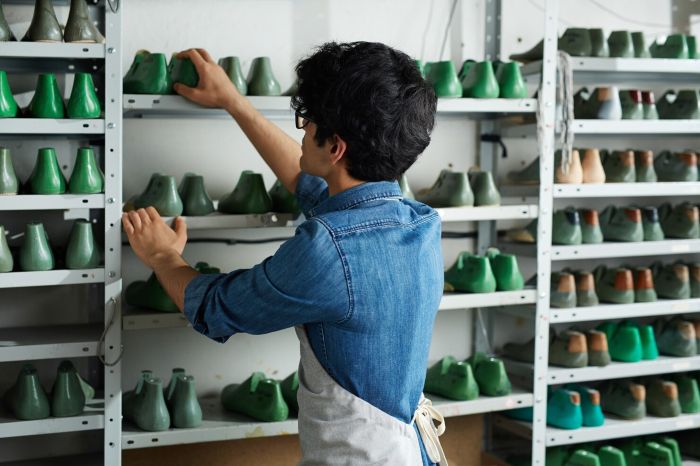
Size and fit are measured against a last or a size chart. A random sample of pairs is measured for length, width, and heel height, with a stated tolerance. Brands with tight fit requirements often check a larger number of pairs per size. Marking errors are common too: a size 9 stamped on a shoe that measures as an 8.5 is the kind of defect that generates returns almost immediately.
Cosmetic defects make up the bulk of what inspectors find. Glue marks on the upper, scuffs, dirt, uneven polish, creases in the leather, and misaligned logos all affect how the product looks on a shelf. Whether these count as minor or major depends on the product positioning. A premium leather shoe will have a stricter standard than a casual canvas one, and the spec should say so.
Flex and wear behaviour can be tested simply. Flexing a sample sole several hundred times on a basic machine, or by hand on a sample, shows early cracking or separation. Slip resistance matters for work footwear and must be measured in a lab to a recognised method, not guessed at. Buyers selling into regulated categories should have this testing done on a pre-production sample and again on production units.
Electronics assembly also sits in Vietnam, and some buyers source cables, chargers, and small devices from there. The checks differ: functional testing of every port and button, electrostatic discharge precautions on the line, and cosmetic grading of casings. A good inspection service provider will assign someone who understands the specific product.
Packing completes the list. Shoes are packed in boxes with tissue, stuffing, and sometimes silica gel. Check that each box has the right shoe, the correct label, the barcode, and that the carton assortment matches the order. InspectionService.com covers footwear inspections across both the southern and northern production zones, and a staged approach with checks during production catches bonding issues before the whole lot is assembled.
Seasonal humidity affects adhesives in a way buyers outside Vietnam seldom consider. Glue cures differently in the wet season, and a factory that doesn’t adjust its drying time or ventilation sees more bonding failures between June and October. If an order falls in those months, ask the inspector to take extra bond checks and to note the plant’s conditions in the report. Also confirm that retention samples are stored away from sun and heat. A retained pair is a useful reference if a dispute arises months later, but only if it has been kept in a condition close to the one in which it left the factory.
Tet and the rainy season both put pressure on timelines. Plan inspections early, and leave room for rework.